
Blood tests are among the most commonly used laboratory investigations. They can provide information about different aspects of the body, including blood cells, glucose levels, cholesterol, kidney function, liver function, and other measurable markers.
However, reading a laboratory report can sometimes be confusing. Medical abbreviations, numbers, units, and reference ranges may not be easy to understand without a medical background. This is where a blood report analyzer can be useful as an educational tool.
What Is a Blood Report Analyzer?
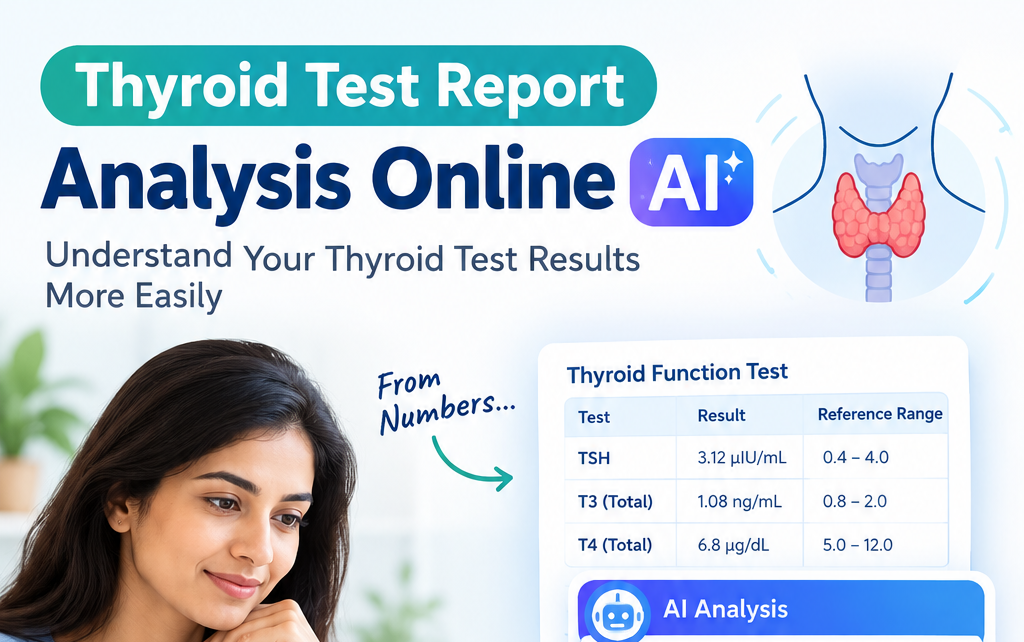
A blood report analyzer is a digital tool designed to help users understand information presented in a blood test report. Depending on the tool, it may explain test names, describe what particular markers generally indicate, and highlight results that fall outside the reference range provided by the laboratory.
AI-powered versions can make these explanations easier to understand by converting technical terminology into simpler language.
For example, instead of simply seeing an unfamiliar abbreviation such as Hb, WBC, or TSH, a user may receive a general explanation of what the test measures and why it may be included in a laboratory report.
What Can a Blood Report Contain?
The tests included in a blood report depend on the type of testing requested. Some commonly reported measurements include:
Complete Blood Count
A complete blood count, or CBC, can include measurements such as:
Hemoglobin
Red blood cell count
White blood cell count
Platelet count
Hematocrit
Different types of white blood cells
These measurements provide information about blood cells and can be useful to healthcare professionals when evaluating a variety of conditions.
Blood Glucose
Glucose testing measures the amount of sugar in the blood at a particular time. Depending on the test, it may be performed while fasting or under other specified conditions.
Lipid Profile
A lipid panel commonly includes measurements such as total cholesterol, LDL cholesterol, HDL cholesterol, and triglycerides.
Liver Function Tests
Depending on the panel, liver-related testing may include markers such as ALT, AST, bilirubin, alkaline phosphatase, and albumin.
Kidney Function Tests
Tests such as creatinine and blood urea nitrogen may be included when assessing kidney function, alongside other measurements depending on the clinical situation.
How Does a Blood Report Analyzer Help?
The main benefit of a blood report analyzer is simplifying information.
A laboratory report may tell you that a result is outside the reference range, but it may not explain what the test itself measures. A digital analyzer can provide general educational information about individual markers.
It may help users:
Understand unfamiliar medical terminology
Review multiple test results in one place
Understand laboratory reference ranges
Identify results they may want to discuss with a doctor
Prepare questions for a medical appointment
Learn more about commonly tested blood markers
This can be particularly helpful for people who receive digital laboratory reports and want to understand the terminology before discussing the results with a healthcare professional.
Why Reference Ranges Are Important
One of the most important things to remember when reviewing a blood test is that reference ranges can vary between laboratories.
A result that appears outside a range does not automatically mean that a person has a medical condition. Conversely, a result within the reference range does not necessarily rule out every possible health issue.
Age, sex, medications, medical history, symptoms, testing methods, and other factors can influence how laboratory results are interpreted.
A good blood report analyzer should therefore be viewed as a tool for understanding information rather than as a replacement for professional medical interpretation.
Can AI Interpret Blood Reports?
AI technology can process large amounts of structured information and explain common laboratory terminology in a conversational format.
An AI-based blood report analyzer may organize the results and provide plain-language explanations. Some tools can also help users understand relationships between different markers.
However, AI does not have the complete clinical context that a healthcare professional may have. It may not know about recent symptoms, physical examination findings, previous diagnoses, medications, or other relevant information unless that information is specifically provided.
For this reason, AI-generated explanations should be treated as educational information rather than a diagnosis.
How to Use a Blood Report Analyzer Responsibly
If you use a digital analyzer, start with your original laboratory report. Make sure the test names, values, units, and laboratory reference ranges are available.
Then use the tool to understand unfamiliar terms and make notes about anything you want to discuss with your healthcare professional.
Avoid making important medical decisions based solely on an automated interpretation. Do not start, stop, or change prescribed medication because of an AI-generated result explanation.
If a report contains a significantly abnormal result or you have concerning symptoms, contact an appropriate healthcare professional rather than relying solely on an online tool.
Benefits for Health Awareness
One useful role of a blood report analyzer is improving health literacy. When people understand what common laboratory markers represent, they may feel more prepared to discuss their health with their doctors.
It can also make it easier to compare information from previous reports, although comparisons should be made carefully because testing methods and reference ranges can change.
The goal is not to replace professional care but to make laboratory information less intimidating and easier to discuss.
Final Thoughts
A blood report analyzer can be a convenient way to understand common blood-test terminology and organize questions about laboratory results. AI-powered tools can make technical information more accessible by providing simple explanations of different markers and reference ranges.
However, laboratory results are only one part of assessing health. Proper interpretation requires consideration of the individual's symptoms, medical history, medications, and other clinical information.
Used responsibly, a blood report analyzer can serve as a helpful educational companion while professional healthcare remains the foundation for diagnosis and treatment.


Write a comment ...